Creating Positive Dental Experiences for Growing Smiles
At Canterbury Family Dental, we understand that children have unique dental needs and deserve specialised care in a gentle, welcoming environment. Our dentists and experienced team are committed to helping children develop healthy oral hygiene habits and positive associations with dental care from an early age.
Our Dentists & Child-Friendly Team
Working together to provide comprehensive paediatric dental care, our team focuses on making each visit comfortable and educational for both children and parents. We take the time to explain treatments in age-appropriate ways and work at your child’s pace to help build confidence and trust.

First Visit For Toddlers
At Canterbury Family Dental we welcome young children with a safe and secure entertainment area in our reception.
We believe a dental appointment should be a positive experience. If your child is brought in from an early age, we endeavour to help make it a comfortable and welcoming experience.
We recommend bringing your child in to watch an older sibling or their parent have an examination first. This may help familiarise your child with the sounds and environment of the dental office. Then when it is their turn they may already be more comfortable with the surroundings.
A simple examination should be all that is needed and this should be talked about beforehand as a positive experience. The more positive experiences your child can have at the dentist, the better they may feel about future visits.
The Importance of Baby Teeth
Your child should have 20 baby teeth by the age of two-and-a-half. Baby teeth play an important role in speech development6 and although these teeth will fall out naturally, premature childhood tooth loss may have a significant impact on the alignment of the adult teeth7.
The baby teeth are positioned in such a way so as to help guide their permanent adult successors to come through in proper alignment.
The following are important for maintaining healthy baby teeth:
- Proper brushing
- Flossing
- A healthy diet
Remember, the back baby molars need to last until your child is a teenager!
Many children (and their parents) feel they are capable of brushing and flossing their teeth alone, but help from a parent or carer is important until your child turns 10 years old. Up to this age, your child lacks the manual dexterity required to effectively clean all the tooth surfaces and parental assistance will prove invaluable.
Fissure Sealants
Prevention is better than cure and this also holds true for tooth decay. Fissure sealants are frequently used to help prevent tooth decay in those hard to reach places or in deep grooves which may be susceptible to a build-up of plaque.
The sealant is a tooth-coloured resin coating and is usually placed on adult molars soon after they appear, around the age of 6 years.
In this simple procedure the sealant is painted onto the biting surfaces of molars. It is hardened using a concentrated beam of ultraviolet light creating a protective covering which may remain in place for many years with proper care.
Orthodontics
A discrepancy between tooth size and jaw size may push your child’s teeth out of alignment.
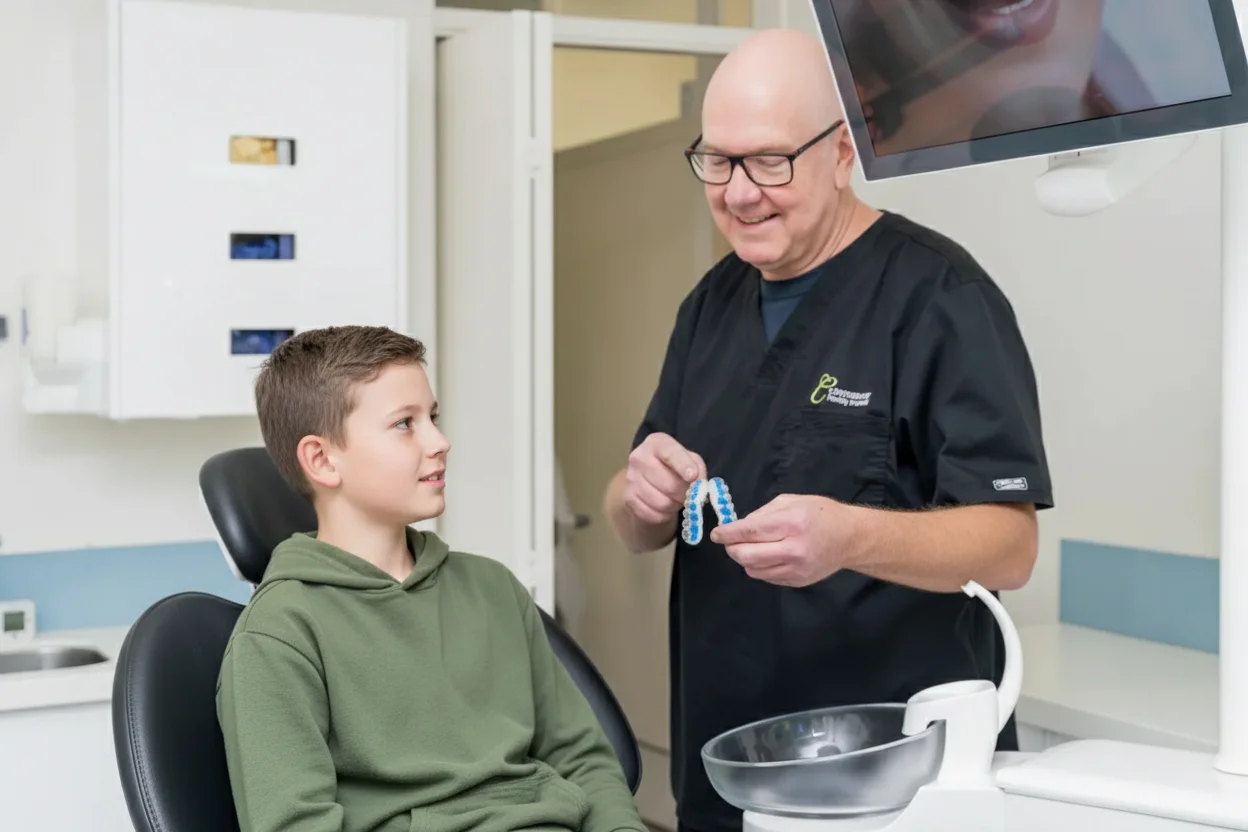
Our dentists work in collaboration with local specialists to recommend the most appropriate treatment options for your child to help minimise the amount of time they may need to undergo orthodontic treatment.
If you are concerned about the positioning of your child’s teeth, schedule an obligation-free assessment today.
Why should I straighten mine/my children’s teeth?
- May support healthier teeth and gums Correctly aligned teeth may be easier to brush and floss, and may allow saliva to flow more freely between teeth, potentially helping to reduce the risk of cavities and gum disease8.
- May reduce risk of abnormal wear Proper alignment may help the top and bottom jaws to meet correctly, which may enable more effective chewing. This may help reduce stress on the teeth which could help prevent them from cracking and wearing prematurely.
- May help protect jaw joints Proper bite and alignment may help prevent excessive wear of jaw joints and potential damage to the bone surfaces. It may also help reduce headaches and pain that can be associated with bite problems9.
When wearing braces, patients need to be extra vigilant with their oral hygiene. Regular brushing, flossing and dental visits are important to help keep teeth and gums healthy.
A healthy, balanced diet is also important to maintain a healthy mouth and patients may be advised to avoid certain foods that could get stuck in the braces (e.g. chewing gum or toffees).